By the Carquired teamPublished
A bill of sale is not always required when you sell a car in California with a properly signed title, but the DMV lists its own Bill of Sale form, REG 135, among the forms that may be needed in a transfer. It is good protection either way. Include the date and time, the price, the VIN, year, make and model, the plate number, the odometer reading and both parties’ names, addresses and signatures.
Do you need a bill of sale in California?
For a standard private sale, the signed title is what transfers ownership. The DMV does list the Bill of Sale (REG 135) among the forms that may be required when transferring a vehicle, and it is common when a title is being replaced or when the paperwork needs to show the purchase price.
Even when nobody asks for it, a bill of sale is your written record of what was sold, to whom, when and for how much. If a ticket, toll or dispute ever turns up, it backs up your release of liability.
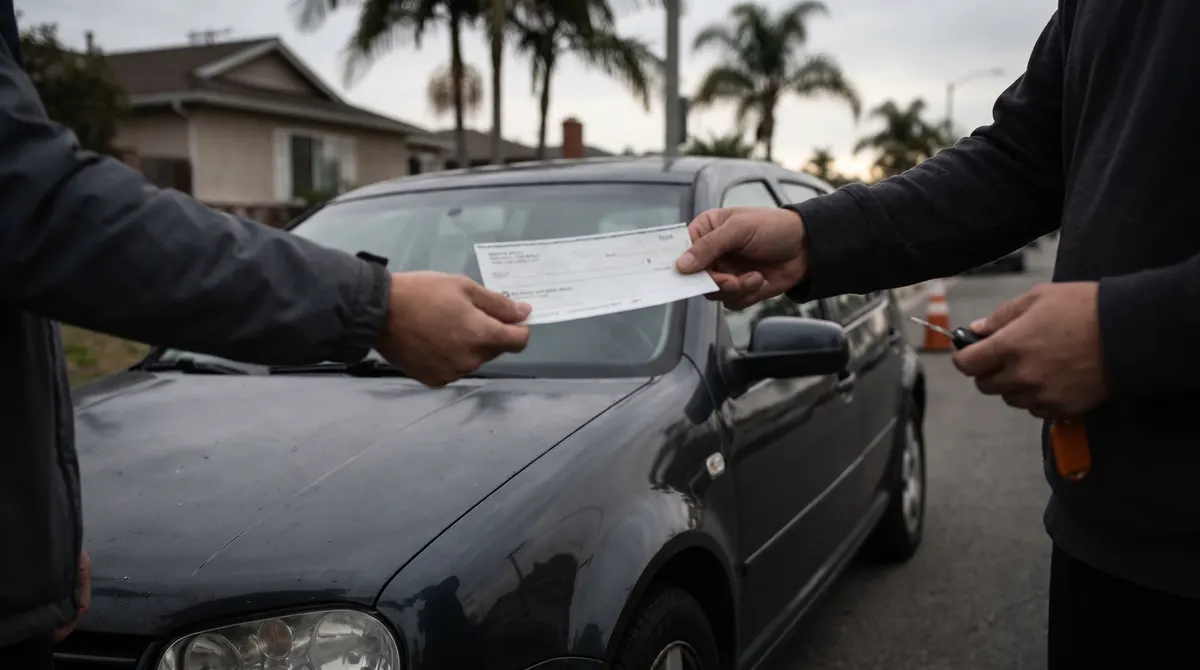
What to put on a bill of sale
- Date of sale, and the time the car changed hands.
- Sale price, and how it was paid (cash, cashier’s check, bank transfer).
- Vehicle identification number (VIN), year, make and model.
- License plate number.
- Odometer reading at the time of sale.
- Seller’s full name, address and signature.
- Buyer’s full name, address and signature.
- A line saying the car is sold as is, if that is the deal.
Get your cash offer
Takes about two minutes. Costs nothing.
Your details go to Carquired only. We never sell or share them.
Using the DMV form, REG 135
The easiest option is the DMV’s own Bill of Sale (REG 135). It has a box for each item above, it is one page, and the DMV recognizes it. Fill in two copies, or fill in one and photograph it, so buyer and seller each keep one.
A handwritten bill of sale is also fine as long as it has the same information and both signatures. It does not need to be notarized.
How each document fits together
| Document | What it does | Who keeps it |
|---|---|---|
| Title (pink slip) | Transfers ownership once signed and submitted | Buyer submits it to the DMV |
| Bill of sale (REG 135) | Records the price, date and parties | Both, one copy each |
| Release of liability (NRL) | Ends your liability after the sale date | Seller files it, keeps the confirmation |
| Smog certificate | Shows the car passed, if one is required | Seller provides, buyer submits |
Write it so it protects you
Record the time as well as the date, because tickets and tolls are time-stamped. Note the payment method, and do not sign anything until the funds are verified. Cashier’s checks can be faked and app payments can be reversed. Take a photo of the buyer’s ID next to the signed bill of sale.
When you sell to Carquired, you get the sale details you need at pickup, and payment happens on the spot.
Sources: DMV: Bill of Sale REG 135 (PDF), DMV: Title transfers and changes. This guide is general information, not legal or tax advice. Rules change, so check the official source for your situation.