By the Carquired teamPublished
In a California sale, every registered owner signs the title to release the car, any lienholder releases its interest, and the buyer fills in their details and signs as the new owner. The buyer then submits the title to the DMV with the transfer fee within 10 days. As the seller, you provide a valid smog certificate if one is needed and file a release of liability within 5 days.
Before you sign anything
- Find the title. If it is lost, start with a duplicate title (REG 227).
- Check the names. Two owners joined by “and” both have to sign. Joined by “or”, either one can.
- Check for a lienholder. If a bank or lender is listed, it has to release its interest before ownership can pass. Paying off the loan is what triggers that.
- Have a pen and no correction fluid. Cross-outs and white-out are a common reason a transfer gets kicked back.
Who signs where
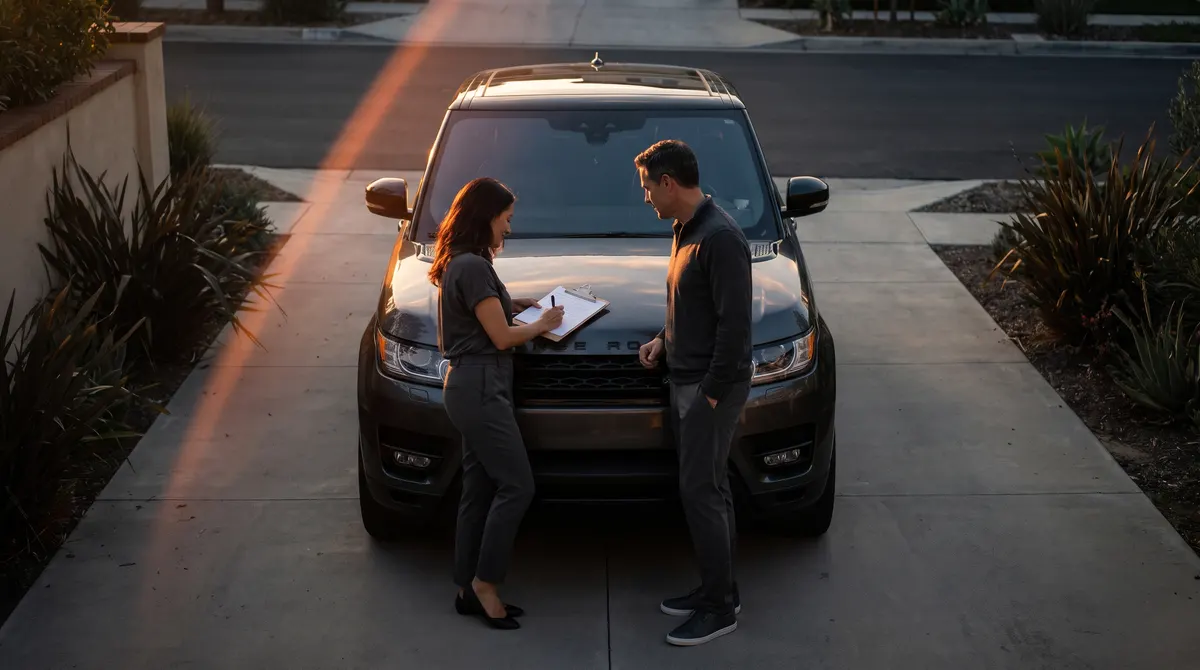
A California Certificate of Title has a place for the registered owner or owners to sign and release their interest in the car, a place for the lienholder to release its interest if there is one, and a section for the new owner’s name, address and signature.
- The seller signs on the registered owner line, exactly as the name appears on the title.
- If there is a lienholder, the lender signs its release, or provides a lien release with the title.
- The buyer prints their name and address and signs as the new owner. Fill this in together. Never hand over a title with the buyer section blank.
- Record the odometer reading where the title asks for it. For most vehicles from model year 2011 on, an odometer disclosure is required.
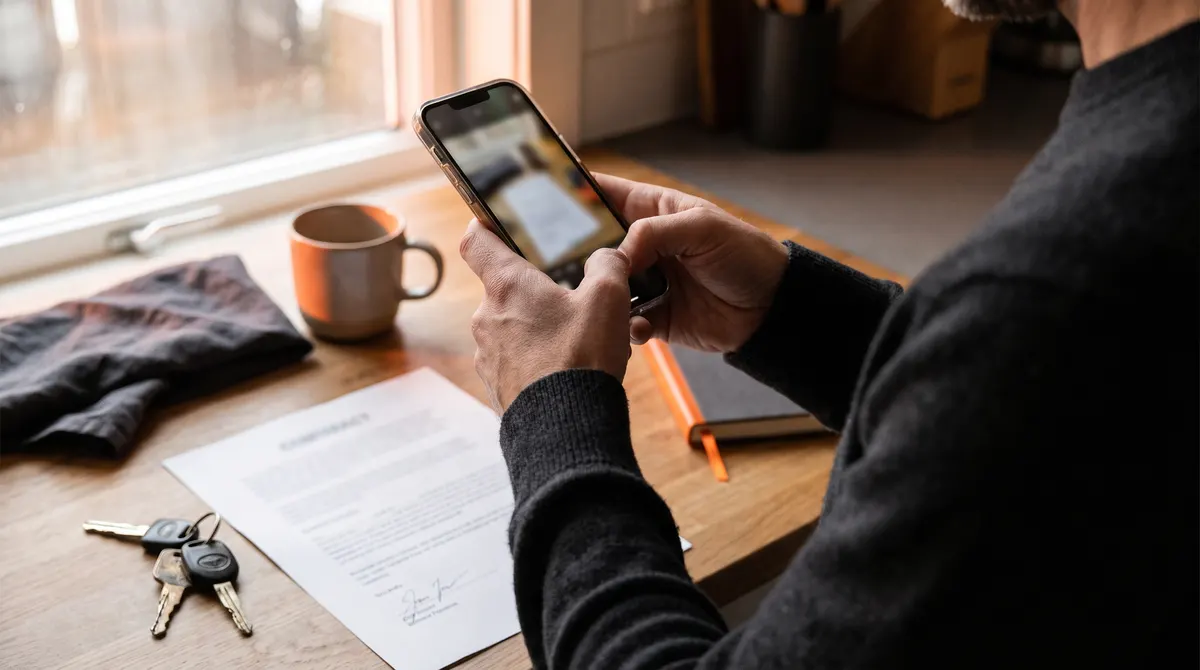
- Take a clear photo of both sides of the signed title before it leaves your hands.
Get your cash offer
Takes about two minutes. Costs nothing.
Your details go to Carquired only. We never sell or share them.
What the buyer does next
The DMV says any change in ownership has to be reported within 10 days. The buyer brings or mails the signed title, the smog certificate (if required) and the transfer fee, and pays use tax on the purchase price when they register the car. You do not collect sales tax in a private sale.
Smog, and who provides it
In most California sales the seller has to give the buyer a valid smog certificate. Cars less than four model years old are the main exception: the buyer pays a smog transfer fee instead. Electric cars, gas cars from 1975 or older and transfers between close family members are also exempt. More detail in who pays for the smog check.
Gifts, family and inherited cars
Giving a car to a family member still uses the title, plus a Statement of Facts (REG 256) to explain that it is a gift, and the transfer fee. When the owner has died, an heir can often transfer the car with the death certificate and the Affidavit for Transfer Without Probate (REG 5), within DMV value limits. More in selling an inherited car.
Your job after the title is signed
File your Notice of Transfer and Release of Liability within 5 days. It is free online and it protects you if the buyer never completes the transfer. Step by step: how to file a release of liability.
Selling to Carquired? We check the title with you at pickup, and if the car is financed we pay your lender directly, so you do not have to chase the lien release yourself.
Sources: DMV: Title transfers and changes, DMV: Smog inspections. This guide is general information, not legal or tax advice. Rules change, so check the official source for your situation.